
Affiliate disclosure: Birdsmania is a participant in the Amazon Services LLC Associates Program. As an Amazon Associate we earn from qualifying purchases. See our Affiliate Disclosure.
Quick answer: Cockatiels need a minimum cage size of 24″ L × 24″ W × 24″ H, but larger is always better. A flight cage of 36″ × 24″ × 24″ is ideal, providing roughly 20+ cubic feet of space. Bar spacing must not exceed 0.75 inches to prevent head entrapment and injury.
Cockatiel Cage Size Chart
Selecting the right cage is one of the most critical safety decisions for your cockatiel. Size directly impacts your bird’s physical and mental health, behavior, and lifespan. Below is a comprehensive size guide:
| Cage Type | Minimum Dimensions | Cubic Footage | Recommended For |
|---|---|---|---|
| Minimum (emergency only) | 24″ × 24″ × 24″ | 12 cu. ft. | Temporary; vet hospital |
| Standard single | 24″ × 24″ × 30″ | 15 cu. ft. | One cockatiel (minimal) |
| Ideal single | 36″ × 24″ × 24″ | 18 cu. ft. | One cockatiel (recommended) |
| Flight cage | 36″ × 24″ × 30″ | 22.5 cu. ft. | One cockatiel (optimal) |
| Large/aviary | 48″ × 30″ × 30″ | 36 cu. ft. | Multiple birds or extensive flight |
Bar Spacing, Materials & Safety
Bar spacing and construction materials are non-negotiable safety factors. Incorrect spacing can result in head entrapment, injury, or death. Always verify these specifications before purchasing.
Bar Spacing: Maximum 0.75 inches (19mm) for cockatiels. Never choose a cage with wider spacing—your bird’s head can become stuck while trying to investigate or escape.
Safe Materials: Stainless steel or powder-coated metal (avoid zinc-coated galvanized steel, which is toxic). Avoid galvanized, rusty, or chipped cages entirely. Wooden dowels are acceptable for perches but never for cage construction. Verify that any wood components are untreated and non-toxic (apple wood, willow, or safe hardwoods).
Unsafe Materials: Lead-painted cages (common in older units), zinc-coated metal, PVC plastic internal surfaces, and cages with sharp edges or burrs. Chipped paint poses an immediate poisoning risk.
Shape: Rectangular or square cages are preferable to round ones. Round cages can disorient birds and limit their ability to find perches and hiding spots.
Six Cage Types & Recommendations
1. Flight Cage (36″ × 24″ × 30″)
Best for: Primary home with ample wing-stretching room. Check price on Amazon
Flight cages are the gold standard for cockatiels. They provide sufficient height for vertical movement and length for short flights. Ensure bar spacing is no more than 0.75 inches.
2. Stainless Steel Cage
Best for: Long-term durability and health safety. Check price on Amazon
Stainless steel models eliminate rust and toxin concerns. Though more expensive upfront, they last decades without degradation. Ideal if your cockatiel is a chewer or you live in humid climates.
3. Travel/Portable Cage
Best for: Vet visits, travel, or outdoor time in a secure carrier. Check price on Amazon
Smaller (24″ × 18″ × 20″) with a secure door and handle. Used short-term only—not suitable as a primary residence. Ensure ventilation and no gaps for escape.
4. Double Cage / Multi-Level
Best for: Two cockatiels or birds needing vertical enrichment. Check price on Amazon
Roughly 36″ × 24″ × 48″ with platforms or dividers. Provides multiple roosting heights and territory zones. Must have secure locks to prevent escape.
5. Breeding Cage
Best for: Paired cockatiels during breeding season. Check price on Amazon
Often larger (48″ × 30″ × 30″) with nesting box attachments and privacy screens. Consult an avian vet before breeding—special diet and lighting requirements apply.
6. Outdoor Aviary
Best for: Summer enrichment or sanctuary roosting. Check price on Amazon
Fully enclosed, predator-proof structures. Allows natural sunlight and airflow while keeping your bird safe from hawks and other threats. Always supervise outdoor time.
Cage Setup Essentials
Size alone isn’t enough—proper setup determines whether your cockatiel thrives or develops behavioral problems.
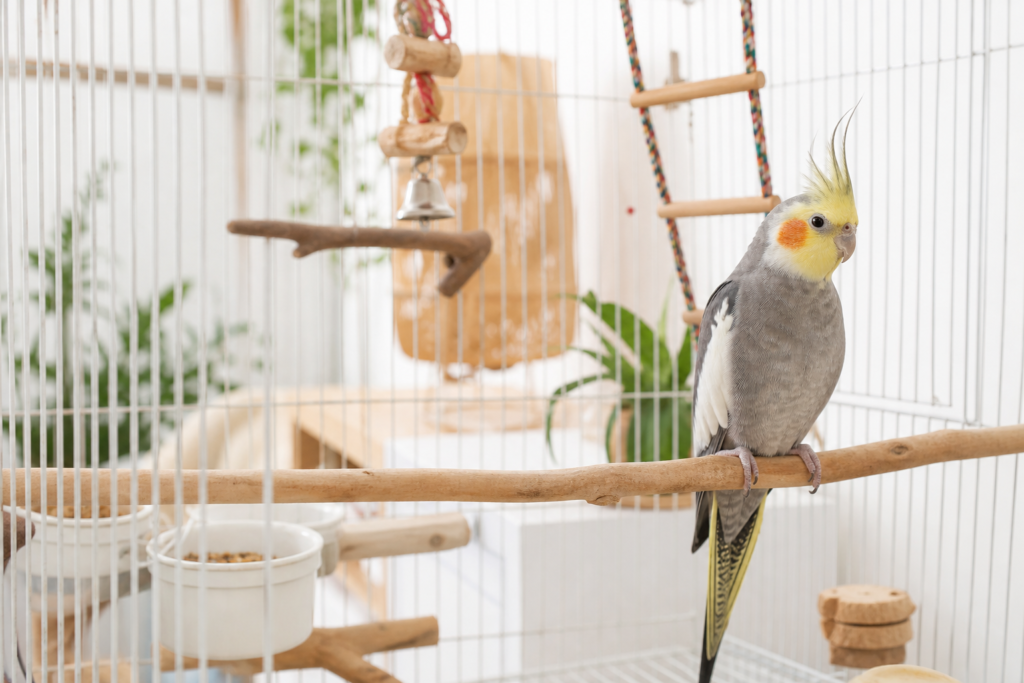
Perches: Provide 2–3 perches at varying heights and diameters (0.75″ to 1.5″ diameter). Natural wood perches encourage foot exercise and nail health. Avoid sandpaper perches—they can damage skin. See our guide on safe bird toys and perches.
Food & Water Bowls: Position food and water stations away from perches to minimize contamination. Use stainless steel or ceramic (never plastic). Change water daily; food should be fresh and free of mold.
Toys & Enrichment: Rotate toys weekly to maintain interest. Include foraging toys, destructible toys (paper, wood), and swings. Check our foraging toy recommendations for species-appropriate options.
Lighting: Provide 10–12 hours of sleep in a quiet, dimly lit area. Inadequate sleep causes aggression and feather plucking. Consider a cage cover during night hours.
Spacing from Kitchen: Place cage away from cooking areas to avoid Teflon fume inhalation (a common cause of sudden cockatiel death). Avoid strong chemical odors, scented candles, and aerosol sprays.
Frequently Asked Questions
Can I use a rectangular cage instead of a flight cage?
Yes, provided dimensions are at least 36″ × 24″ × 24″ with proper bar spacing. Rectangular cages are preferable to round ones because they allow natural perching and movement patterns.
How often should I clean the cage?
Daily: Remove uneaten fresh food, soiled bedding, and droppings. Weekly: Deep clean with bird-safe disinfectant, replace perches if damaged, wash toys. Monthly: Descale food/water bowls. Thorough cleaning prevents bacterial and fungal infections.
What perch materials are safe for cockatiels?
Apple wood, willow, eucalyptus, and pear wood are safe, natural options. Avoid plastic (can cause ingestion injuries), treated lumber, and sandpaper. Natural branches from pesticide-free trees work well too—replace when frayed.
Are cage dividers safe if I have two cockatiels?
Dividers allow same-cage housing with privacy. Use solid (not wire) dividers to prevent territorial aggression. Ensure each bird has access to food, water, and perches. However, cockatiels often prefer separate cages. Consult an avian vet before attempting co-housing.
Should I leave my cage door open for flight time?
Yes, 1–2 hours daily of supervised out-of-cage time is essential for exercise, mental stimulation, and social bonding. However, secure your home first: close windows, remove toxic plants, block ceiling fans, and confine other pets. Read our full cockatiel care guide.
What’s the lifespan of a typical bird cage?
Metal cages last 10–20 years if properly maintained. Stainless steel lasts indefinitely. Powder-coated metal may chip after 5–10 years, exposing rust. Inspect regularly for damage and rust spots—repair or replace immediately if found.
Final Recommendation
Invest in a quality flight cage (36″ × 24″ × 30″ minimum) constructed from stainless steel or powder-coated metal with 0.75″ or smaller bar spacing. Your cockatiel will occupy this cage for 40–60 years; cutting corners on safety or comfort will result in health problems, behavioral issues, and shortened lifespan. Start with a proper setup—it’s the single most important investment in your bird’s wellbeing.
Need more guidance? Visit our general pet bird resource center for additional articles on diet, health, and training.
