
Affiliate disclosure: Birdsmania is a participant in the Amazon Services LLC Associates Program. As an Amazon Associate we earn from qualifying purchases. See our Affiliate Disclosure.
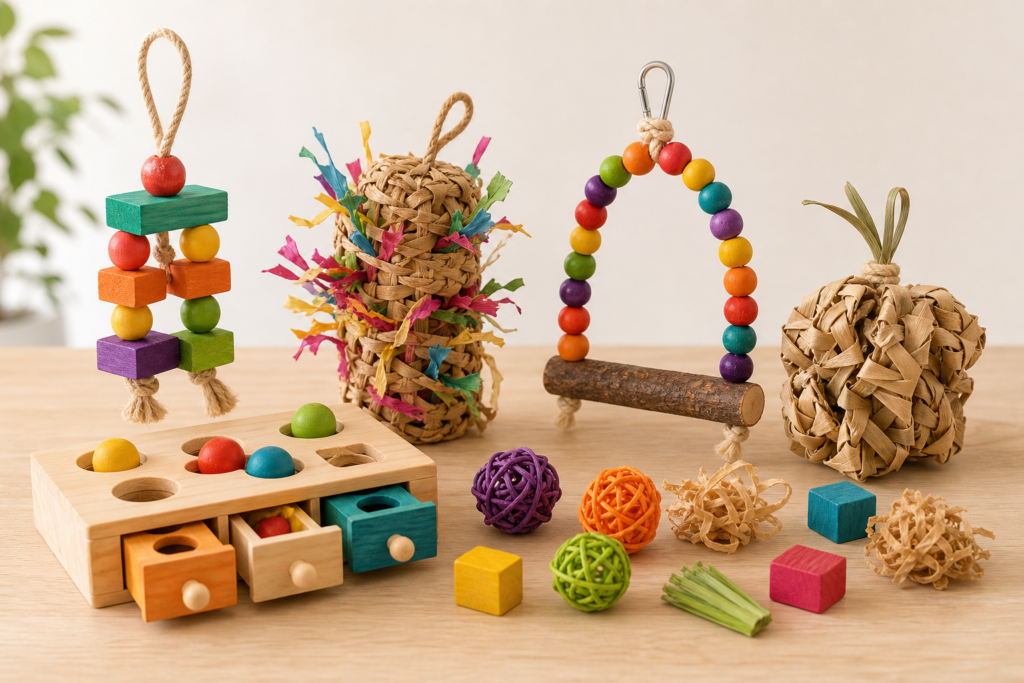
Pet birds are remarkably complex creatures with sophisticated behavioral needs and preferences. While all birds share certain fundamental requirements—food, water, shelter, and social interaction—their enrichment needs vary dramatically based on species, personality, and cognitive level. Understanding the different categories of bird toys and the specific roles they play in avian mental and physical health is essential for providing comprehensive enrichment. Whether you own tiny parakeets, medium cockatiels, or large macaws, the principles of effective enrichment remain consistent: provide variety, maintain novelty, and engage their natural instincts.
At Birdsmania, we believe that informed bird ownership leads to happier, healthier feathered companions. This guide explores the major categories of bird toys and how they contribute to overall wellbeing. For species-specific recommendations, visit our detailed guides on cockatiels, parakeets, and large parrots. To explore specific product recommendations, check out our comprehensive buyer guides on cockatiel foraging toys, toys for parakeets, and parrot foraging toys.
Understanding Bird Toy Categories
Effective enrichment requires offering your bird access to multiple toy types, each serving a different psychological and physical need. Rather than thinking of toys as decorations, consider them essential tools for behavioral health. Just as humans need variety in activities—exercise, entertainment, intellectual challenge, relaxation—birds need diverse enrichment opportunities. Understanding these categories helps you create a balanced, comprehensive enrichment program tailored to your bird’s species and individual personality.
6 Essential Types of Bird Toys
1. Foraging and Puzzle Toys
In the wild, birds spend the majority of their day foraging—searching for scattered food sources, cracking open shells, and working through natural obstacles to access nutrition. Foraging toys replicate this essential natural behavior. These toys require your bird to problem-solve, manipulate objects, and work for their food reward. Check price on Amazon for quality foraging options.
Foraging toys range from simple (treats hidden in a paper ball) to highly complex (multi-level acrylic puzzles with multiple access points). The cognitive engagement provided by foraging toys is extraordinary—birds working on puzzles experience the same dopamine release as wild birds when they successfully locate food. For cockatiel owners, our detailed cockatiel foraging guide provides specific recommendations. Smaller bird owners should explore our parakeet toy guide, while large parrot owners benefit from our comprehensive advanced foraging strategies.
Benefits: Mental stimulation, problem-solving engagement, natural behavior replication, stress reduction, extended occupation
2. Destructible and Shredding Toys
Birds have powerful beaks designed for cracking seeds, excavating tree cavities, and manipulating objects. In captivity, they need appropriate outlets for these destructive urges. Natural wood, palm leaves, leather, and paper toys provide satisfying destruction opportunities. Check price on Amazon for sustainable shredding options.
Shredding is not just a physical activity—it’s deeply satisfying and stress-relieving for birds. A bird engaged in enthusiastic destruction is a bird experiencing psychological wellbeing. If your bird doesn’t have appropriate destruction outlets, they’ll redirect that energy toward destructive behaviors like feather plucking, aggression, or property destruction. Untreated wood, woven palm leaves, and vegetable-tanned leather are all completely safe options. Many birds will work for hours on a single toy, gradually reducing it to sawdust.
Benefits: Stress relief, natural beak exercise, creative engagement, behavioral outlet, hours of independent occupation
3. Movement and Swing Toys
Birds are creatures of motion—they fly, hop, climb, and swing throughout the day. Swing toys provide the sensation of gentle movement that mimics natural flight and wind experiences. Swings, spinning wheels, and moveable perches allow birds to experience physical sensation in a confined space. Check price on Amazon for durable movement toys.
Movement toys are particularly valuable for birds in smaller cages or birds with limited out-of-cage flight time. The sensation of swinging and movement engages the vestibular system (inner ear balance), providing physical and neurological stimulation. Small birds like parakeets especially love swings and will spend hours contentedly rocking back and forth. Larger birds may prefer wheels or more robust swinging structures.
Benefits: Physical exercise, vestibular stimulation, movement engagement, natural behavior replication, reduced restlessness
4. Auditory and Bell Toys
Birds are naturally drawn to sound. Bells, chimes, and sound-producing toys provide auditory stimulation and encourage vocalization. Many birds will spend time interacting with bells, creating their own “music” and enjoying the sensory feedback. Check price on Amazon for quality bell and sound toys.
While auditory enrichment is valuable, it’s important to be mindful of volume. Some birds become obsessed with bells and create excessive noise that can disturb household members. Use bell toys strategically, rotating them in and out based on your household’s noise tolerance. Stainless steel bells are preferred over cheaper alternatives—they produce clearer sounds and resist corrosion. The combination of movement (interacting with bells) and sound creates multi-sensory enrichment.
Benefits: Auditory stimulation, natural vocalization encouragement, novelty engagement, interactive entertainment, species-appropriate behavior
5. Mirror and Social Toys
Many birds are naturally social and attracted to their own reflections in mirrors. Mirror toys tap into birds’ social instincts, providing a sense of companionship even for solo birds. However, mirrors require careful management—excessive mirror interaction can sometimes lead to obsessive behaviors or hormonal stimulation. Check price on Amazon for safe mirror alternatives.
Mirror toys work best as occasional enrichment rather than permanent fixtures. Rotate mirrors in and out, limiting access to prevent obsessive behavior. Some birds lose interest in human interaction if mirrors are constantly available. For small parakeets, mirror interaction can be particularly engaging and should be monitored. Larger parrot species may benefit more from other enrichment types.
Benefits: Social engagement, visual stimulation, interactive entertainment, novelty provision, species-appropriate behavior (when used in moderation)
6. Climbing and Manipulation Toys
Chains, ropes (with appropriate materials), ladders, and textured climbing structures encourage physical activity and natural climbing behaviors. These toys engage birds’ motor control and provide physical exercise in confined spaces. Check price on Amazon for safe climbing structures.
Climbing toys are particularly valuable for species with strong climbing instincts. Stainless steel chains are safer than rope alternatives, offering zero risk of entanglement. Natural branches and wood structures also provide excellent climbing opportunities while offering additional benefits like beak maintenance. The combination of climbing with other enrichment types (like treats hidden along climbing structures) creates multi-level enrichment experiences.
Benefits: Physical exercise, motor skill development, natural behavior replication, environmental engagement, strength building
Creating a Balanced Enrichment Program
The most effective enrichment programs include toys from multiple categories, rotated regularly to maintain novelty and engagement. Rather than having all toys in the cage simultaneously, implement a rotation schedule where different toys are available on different days. A toy that seemed boring after a week suddenly becomes fascinating when reintroduced after an absence.
Pay attention to your individual bird’s preferences. Some birds are naturally playful and interactive with every toy; others are more selective. Cockatiels tend to enjoy foraging and shredding toys, while parakeets often prefer movement and auditory toys. Large parrots typically thrive with sophisticated puzzle toys and destruction opportunities. Observing your bird’s behavior helps you understand their preferences and tailor enrichment accordingly.
Safety Considerations Across All Toy Categories
Not all toys are appropriate for all birds. A toy perfect for a tiny parakeet might be dangerous for a large macaw, while heavy-duty parrot toys could overwhelm or frighten a small bird. Always match toy size, difficulty, and durability to your bird’s species and personality.
Inspect all toys daily for damage, loose components, or wear. Remove any toy with sharp edges, fraying materials, or small choking hazards immediately. Replace toys regularly—destroyed toys mean your bird is engaged; continue rotating new materials. Avoid toys with galvanized metal (toxic zinc coating), soft PVC, painted wood with potentially toxic finishes, and small bells that could be swallowed.
Frequently Asked Questions
How many toys should my bird have?
A good approach is maintaining 5-8 different toys with only 3-4 available in the cage at any time. This prevents overcrowding while maintaining novelty through rotation. For specific species recommendations, consult our detailed guides on cockatiels, parakeets, or large parrots.
How often should I rotate toys?
Rotate toys every 3-7 days depending on your bird’s engagement level. Some birds lose interest quickly and need more frequent rotation; others are content with the same toy for weeks. Observe your bird’s behavior and adjust rotation schedules accordingly.
Can I make homemade toys?
Absolutely. Paper, untreated wood, natural rope, and cardboard are all safe homemade toy materials. Just ensure all materials are bird-safe, free from toxins, pesticides, and synthetic dyes. Many bird owners save money by creating their own enrichment options.
What’s the difference between enrichment toys and play toys?
Enrichment toys provide mental or physical stimulation that encourages natural behaviors (foraging, climbing, destroying). Play toys are interactive items you use with your bird (balls to roll, objects to chase). Both are important components of comprehensive enrichment.
Are there toys suitable for all bird species?
Some toys work well for multiple species, while others are species-specific. Stainless steel chains and natural wood work well across species; bell strings are perfect for small birds but can be overwhelming for large parrots. Always consider your bird’s size, beak strength, and personality when selecting toys.
How do I know if a toy is appropriate for my bird?
Observe your bird’s interaction. If they ignore a toy completely, it may not match their interests. If they become frustrated or frightened, it’s too difficult. The ideal toy captures attention, encourages engagement, and matches your bird’s problem-solving abilities.
Comprehensive Species-Specific Guidance
Every pet bird species has unique enrichment requirements. Cockatiels thrive with medium-difficulty puzzles and shreddable materials. Parakeets love movement toys and auditory enrichment. Large parrots require sophisticated, multi-component puzzle toys and intensive destruction outlets. Understanding your species’ specific needs ensures you’re providing optimal enrichment.
Conclusion
Bird toys are not luxury items—they’re essential components of comprehensive avian care. By understanding the different toy categories and implementing a strategic rotation program, you’re actively promoting your bird’s mental health, physical wellbeing, and behavioral stability. A properly enriched bird is a happy, healthy, well-behaved companion. Start implementing varied enrichment today, and watch your feathered friend thrive. For species-specific product recommendations, explore our comprehensive buyer guides on cockatiel foraging toys, parakeet enrichment, and advanced parrot enrichment.
