
Affiliate disclosure: Birdsmania is a participant in the Amazon Services LLC Associates Program. As an Amazon Associate we earn from qualifying purchases. See our Affiliate Disclosure.
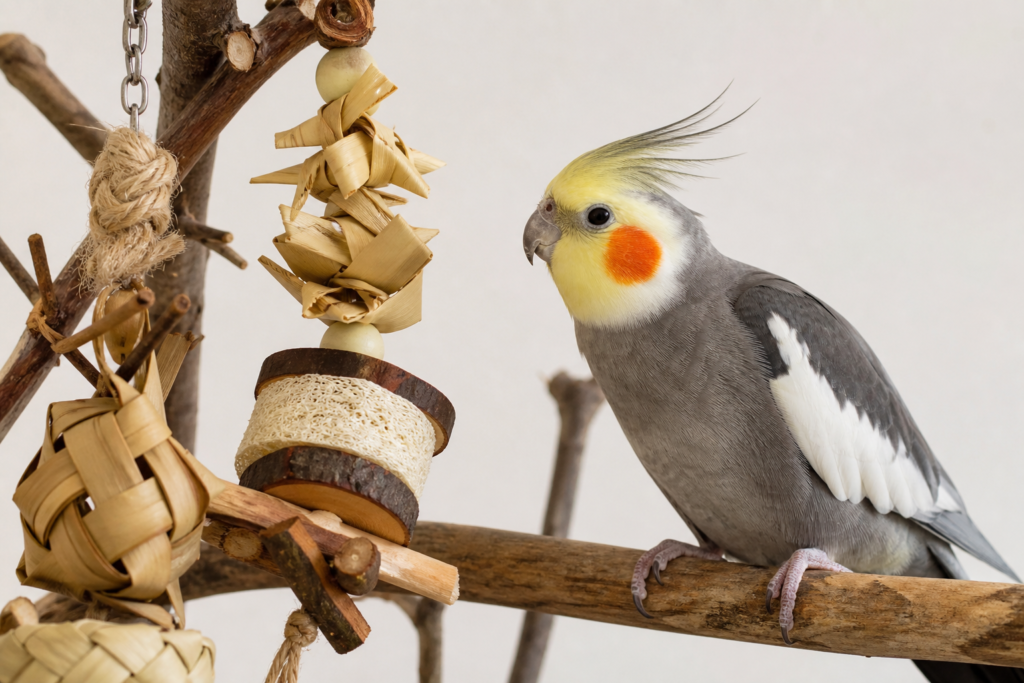
Cockatiels are incredibly intelligent, medium-sized parrots known for their affectionate personalities and impressive whistling abilities. As members of the cockatoo family, these Australian natives possess strong, dexterous beaks and an insatiable need for mental stimulation. Without proper enrichment, cockatiels quickly become bored, anxious, and prone to destructive behaviors like feather plucking and excessive screaming. The solution lies in providing high-quality foraging toys that engage their natural problem-solving instincts and satisfy their biological drive to forage, hunt, and destroy.
Foraging toys are not a luxury—they are an essential component of cockatiel welfare. When your feathered friend is actively working to extract a treat from a puzzle, their brain is flooded with dopamine, the same reward chemical released in wild birds when they successfully locate food. This mental engagement dramatically reduces stress, promotes physical activity, and encourages natural behaviors. Investing in the best cockatiel foraging toys will transform your bird’s quality of life and deepen your bond with your companion.
To learn more about cockatiel care fundamentals, visit our comprehensive cockatiel care guide and explore our complete cockatiel foraging toys collection. For a broader understanding of enrichment across all pet bird species, check out our detailed resources.
Quick Comparison: Top Cockatiel Foraging Toys
| Toy Name | Material | Difficulty | Size | Best For |
|---|---|---|---|---|
| Shreddable Wood Block Tower | Untreated Balsa Wood | Beginner | 4″ x 4″ x 6″ | Aggressive chewers |
| Acrylic Puzzle Forager | Acrylic Plastic | Intermediate | 3″ diameter sphere | Problem-solvers |
| Leather Strip Forage Pouch | Vegetable-tanned Leather | Beginner | 5″ pouch | Shredding instinct |
| Stainless Steel Treat Cage | Stainless Steel | Advanced | 2.5″ cube | Determined birds |
| Palm Leaf Ball | Woven Palm Leaves | Beginner | 3.5″ ball | Gentle foragers |
| Wood Dowel Puzzle Feeder | Pine Wood & Acrylic | Intermediate | 6″ stick | Persistent learners |
Our 6 Best Cockatiel Foraging Toys
1. Shreddable Wood Block Tower
This multi-tiered foraging tower is designed specifically for cockatiels who love to shred and destroy. Each block is made from untreated, sustainably harvested balsa wood that splinters naturally when chewed, satisfying your cockatiel’s biological need to excavate. The tower design allows treats to be hidden between the layers, encouraging your bird to work through each level to find rewards. Balsa wood is completely safe to ingest in small amounts and provides excellent beak maintenance.
Pros:
- 100% natural, safe materials
- Highly destructible—your bird will love demolishing it
- Perfect for aggressive chewers
- Affordable and easy to replace
- Multi-level design extends playtime
Cons:
- Creates wood debris that requires regular cleanup
- May deteriorate quickly for extremely aggressive birds
- Not suitable for birds with respiratory sensitivities
2. Acrylic Puzzle Forager Sphere
This transparent acrylic sphere features multiple access holes of varying sizes, allowing your cockatiel to see the treats inside while working to extract them. The puzzle design requires rolling, manipulation, and pecking to retrieve rewards, making it an excellent intermediate-level enrichment toy. The durable acrylic construction withstands cockatiel beaks and can be easily sanitized with warm water. Seeing the treats adds a visual motivation component that encourages persistent problem-solving.
Pros:
- Transparent design lets your bird see the reward
- Multiple difficulty levels by varying hole sizes
- Easy to clean and sanitize
- Durable acrylic won’t chip easily
- Reusable for years
Cons:
- Some birds lose interest after figuring it out
- Not suitable for extremely aggressive chewers
- Holes may become slippery with food debris
3. Leather Strip Forage Pouch
Vegetable-tanned leather strips woven into a small pouch create the perfect shredding toy. Cockatiels instinctively love to tear and pull at leather, satisfying their natural destructive urges while you hide small treats or nuts inside the pouch. Leather is completely safe to chew and ingest in small amounts, and it provides a satisfying texture that keeps birds engaged for extended periods. This toy is perfect for pairing with your cockatiel’s favorite nut or seed for maximum motivation.
Pros:
- 100% natural, bird-safe material
- Satisfying texture for shredding
- Safe to ingest in small pieces
- Affordable and easy to replace
- Can be filled with favorite treats
Cons:
- Becomes soiled quickly with regurgitated food
- May deteriorate rapidly with aggressive chewers
- Must be inspected daily for loose threads
- Not washable—must be replaced when dirty
4. Stainless Steel Treat Cage
For the determined problem-solver, this heavy-duty stainless steel treat cage offers an advanced foraging challenge. The cage design requires your cockatiel to manipulate multiple components to access the treats inside. Stainless steel is completely non-toxic, cannot chip or flake, and withstands even aggressive beaks. This toy is ideal for cockatiels who have mastered beginner puzzles and are ready for a more complex challenge. It’s perfect for encouraging persistent problem-solving and keeping highly intelligent birds engaged.
Pros:
- Extremely durable and long-lasting
- Heavy-duty construction for aggressive birds
- Completely safe—no toxins or chipping hazards
- Easy to sanitize in hot water
- Offers genuine problem-solving challenge
Cons:
- More expensive than other options
- Some birds may not understand how to use it initially
- Can be loud as birds manipulate metal components
- Requires patience to teach proper use
5. Woven Palm Leaf Ball
This all-natural woven ball made from sustainably harvested palm leaves provides a gentle foraging experience perfect for cockatiels who prefer shredding over intensive puzzle-solving. You can stuff the ball with small treats, shredded paper, or fresh herbs, allowing your bird to unravel the layers to find rewards. Palm leaves are completely digestible and provide excellent enrichment without the commitment of more complex puzzles. The textured surface encourages natural preening and grooming behaviors while your bird works to extract treats.
Pros:
- 100% natural and bird-safe
- Highly destructible—perfect for shredding lovers
- Affordable and easily replaceable
- Can be stuffed with various treats and materials
- Great for gentle, less aggressive birds
Cons:
- Very quickly destroyed by aggressive chewers
- Creates debris that requires cleanup
- Not suitable for birds with respiratory sensitivities to plant dust
- Limited reusability
6. Wood Dowel Puzzle Feeder
This innovative design combines natural pine wood dowels with strategically placed acrylic caps to create a multi-component foraging puzzle. Your cockatiel must remove small wooden pieces and manipulate the acrylic sections to access the treats hidden throughout the toy. The variety of materials and textures provides comprehensive enrichment—satisfying the need to chew, problem-solve, and manipulate objects simultaneously. The modular design allows you to adjust difficulty by adding or removing wooden components.
Pros:
- Multiple difficulty levels with adjustable components
- Combines multiple enrichment types in one toy
- Natural wood provides beak maintenance benefits
- Teaches problem-solving skills progressively
- Engaging design prevents boredom
Cons:
- More complex—may require initial training
- Requires regular maintenance to keep components aligned
- Not ideal for extremely aggressive birds who destroy quickly
- Higher price point
Best Practices: Maximizing Foraging Toy Benefits
Introducing foraging toys to your cockatiel requires patience and strategy. Start by placing the toy in an accessible location within the cage and filling it with highly motivating treats—nuts are usually the gold standard for cockatiels. Spend time demonstrating how the toy works by manually manipulating it yourself while your bird watches. Once your cockatiel understands the mechanism, they will quickly become obsessed with extracting the rewards.
Rotate your foraging toys every 3-5 days to maintain novelty and excitement. When a toy becomes damaged or excessively soiled, remove it immediately. Never leave a toy with loose, frayed components or sharp edges in the cage, as these pose serious injury risks. Create a toy rotation schedule that keeps your cockatiel mentally stimulated without overwhelming them with too many options at once. The goal is to maintain a sense of discovery and novelty that keeps their engagement high.
Remember that foraging toys should complement—not replace—direct human interaction and out-of-cage flight time. A well-rounded enrichment program includes physical exercise, mental stimulation, training, and social bonding with their human flock. Use foraging toys during times when you cannot provide direct attention, such as while you’re working or running errands, to keep your cockatiel productively occupied.
Frequently Asked Questions
How often should I offer foraging toys to my cockatiel?
Ideally, your cockatiel should have access to at least one foraging toy daily. Rotate through multiple toys to maintain novelty and prevent boredom. The goal is to provide 30-60 minutes of active foraging engagement per day, which can be achieved through a combination of puzzle feeders, shreddable toys, and interactive play with you.
Can I make homemade foraging toys?
Absolutely! Homemade foraging toys are an excellent, economical option. Try wrapping treats in natural paper, hiding nuts in an egg carton, or creating simple puzzles from untreated wood and cardboard. The key is ensuring all materials are bird-safe and free from toxins, pesticides, and synthetic dyes.
What treats are best for foraging toys?
Cockatiels love nuts—especially almonds, walnuts, and pecans (in moderation). Other excellent options include seeds, dried fruit, fresh berries, and specialized pellets. Always offer treats in small quantities to prevent obesity, and rotate treat types to maintain interest.
Is it normal for my cockatiel to ignore foraging toys initially?
Yes, completely normal. Some birds need weeks to understand how a new puzzle works. Demonstrate the toy repeatedly, start with highly motivating treats, and don’t give up. Eventually, curiosity will win out and your bird will become engaged.
How do I sanitize foraging toys safely?
For acrylic and stainless steel toys, warm soapy water works well. Natural wood and leather toys cannot be easily sanitized and should be replaced when visibly soiled. Never use harsh chemicals that could leave residue harmful to your bird.
Can foraging toys cause injury to my cockatiel?
When used correctly, foraging toys are very safe. The main hazard is loose components or sharp edges that could injure the beak, tongue, or feet. Inspect toys daily, remove anything damaged immediately, and supervise your bird’s interactions with new toys for the first few sessions.
Our Recommendation
For most cockatiels, we recommend starting with a rotation of three toys: a simple shreddable option (like the palm leaf ball), an intermediate puzzle (like the acrylic sphere), and one challenging toy (like the stainless steel cage) for when your bird is ready. This combination addresses all enrichment needs while preventing boredom through regular rotation.
By investing in quality foraging toys and committing to a structured enrichment routine, you’re not just keeping your cockatiel entertained—you’re actively promoting their mental health, physical wellbeing, and emotional stability. A properly enriched cockatiel is a happy cockatiel, and a happy bird makes for a harmonious, rewarding companionship. For more enrichment ideas and cockatiel care tips, explore our complete cockatiel resources and broader pet bird guides.
