
Affiliate disclosure: Birdsmania is a participant in the Amazon Services LLC Associates Program. As an Amazon Associate we earn from qualifying purchases. See our Affiliate Disclosure.
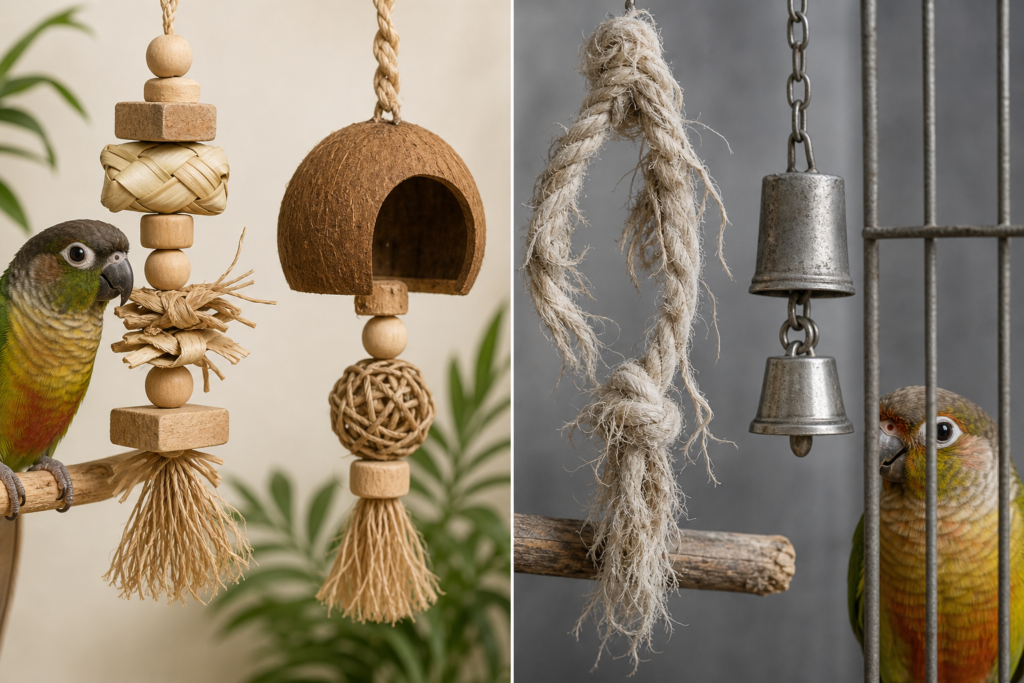
Quick answer: Safe bird toy materials include natural wood, untreated rope, stainless steel, palm leaves, and acrylic. Dangerous materials include lead-based paint, PVC plastic, galvanized metal, plastic mirrors, and glues containing zinc or cadmium. Always inspect toys weekly for splinters, loose fibers, and wear before offering them to your bird.
Safe Bird Toy Materials
Knowing which materials are safe is essential for preventing poisoning, ingestion injuries, and suffocation. Below is a comprehensive checklist of bird-safe materials:
| Material | Why Safe | Common Uses |
|---|---|---|
| Natural wood | Non-toxic, encourages chewing & shredding, natural foraging behavior | Perches, destructible toys, branches |
| Untreated rope (100% cotton/sisal) | Digestible if ingested in small amounts, safe for climbing | Swings, climbing ropes, braided toys |
| Stainless steel | Non-toxic, non-corrosive, durable for heavy chewers | Bells, chains, food bowls, toy hardware |
| Palm leaves (dried, untreated) | Biodegradable, safe to shred and ingest, natural enrichment | Foraging mats, destructible toys |
| Paper (plain, untreated) | Safe to shred & ingest, encourages natural behavior | Cardboard boxes, paper shred, nesting material |
| Acrylic (transparent, non-toxic grade) | Rigid, durable, won’t break or splinter, safe to chew | Chew toys, puzzle toys, perches |
| Leather strips (natural, untreated) | Tough but digestible, encourages natural foot grip | Foot toys, climbing toys (supervised) |
| Cuttlebone / mineral blocks | Pure calcium & mineral source, safe to gnaw | Calcium supplement, beak conditioning |
Unsafe & Dangerous Bird Toy Materials
The following materials pose immediate health risks. Avoid them entirely and inspect used or older toys carefully for these hazards:
| Material | Health Risk | Safe Alternatives |
|---|---|---|
| Lead-based paint | Acute & chronic poisoning; neurological damage, kidney failure | Non-toxic acrylic or stainless steel toys |
| PVC plastic | Leaches phthalates & BPA; causes metabolic toxicity | Non-toxic acrylic, wood, natural fibers |
| Galvanized (zinc) metal | Zinc toxicity causes hemolytic anemia; rapid onset | Stainless steel chains, bells, hardware |
| Plastic mirrors | Can fracture & cause mouth/crop injuries; behavioral problems | Remove mirrors; provide social interaction instead |
| Unsafe adhesives (zinc or cadmium) | Toxic metal poisoning; accumulates in organs | Toys with non-toxic, bird-safe glues only |
| Teflon-coated surfaces | Fumes cause rapid respiratory failure & death | Stainless steel or ceramic cookware in kitchen |
| Pesticide-treated wood | Organ damage, neurological toxicity | Untreated, pesticide-free branches & perches |
| Loose beads or small parts (<0.75″) | Choking hazard; intestinal obstruction if ingested | Toys with securely fastened, large components |
Species-Specific Safety Notes
Cockatiels: Medium-strength chewers. Safe with natural wood, untreated rope, and acrylic toys. Avoid small mirrors and reflective surfaces, which can cause excessive aggression. Rotate toys weekly to prevent boredom and destructive behavior. See our complete cockatiel foraging toy guide.
Small birds (finches, canaries, budgies): Use only toys with minimal choking hazards. Small beads or loose components are especially dangerous. Prefer natural wood perches and simple rope toys. Avoid complex puzzle toys designed for larger birds.
Large parrots (macaws, African greys, amazons): Heavy chewers requiring reinforced toys. Stainless steel chains, thick ropes, and dense wood hold up to intense use. Inspect frequently as larger birds can destroy toys faster. Rotate every 3–5 days to maintain engagement.
Weekly Toy Inspection Routine
A structured inspection habit prevents injuries. Follow this checklist every 7 days:
Visual Check: Look for splinters, cracks, peeling paint, or rust on metal components. Discard any toy showing damage.
Fiber Integrity: Gently tug rope or woven toys—if fibers are loose or fraying, remove the toy immediately. Ingested fibers can cause intestinal impaction.
Hardware Security: Verify all bells, chains, and fasteners are secure. Shake the toy—nothing should rattle or move independently.
Odor Test: Smell for mold, mildew, or chemical odors. Damp toys breed bacteria; discard or wash and fully dry before reusing.
Weight & Stability: Ensure swings, ropes, and hanging toys support your bird’s full weight without sagging excessively.
Replacement: Retire toys every 2–4 weeks even if undamaged. Natural materials degrade and accumulate dust/debris. Rotation also prevents habituation and maintains enrichment value.
Frequently Asked Questions
Are rope toys safe for cockatiels?
Yes, if they’re 100% untreated cotton or sisal rope with diameters appropriate for your bird’s foot size (0.5–0.75″). Inspect weekly for fraying. Remove if fibers are loose or ingested in large amounts. Some experts recommend supervised use only. For safer alternatives, see our toy types guide.
Can I use PVC perches or toys?
No. PVC leaches endocrine-disrupting chemicals (phthalates & BPA) over time, especially at higher temperatures. Replace all PVC perches with natural wood or bird-safe acrylic.
How do I sanitize toys safely?
Mild soap + warm water, then air dry fully (24+ hours) before reintroducing to the cage. Avoid bleach and harsh chemicals that can leave toxic residues. For heavily soiled toys, soak in bird-safe disinfectant (not Lysol), rinse thoroughly, then dry. Wooden toys may be hand-washed but must dry completely.
What should I do if my bird ingests a toy piece?
Contact an avian veterinarian immediately. Small amounts of wood or cotton rope are usually digestible, but plastic, metal, or large fibers can cause impaction. Watch for reduced appetite, lethargy, or straining. Do not induce vomiting—consult your vet first.
Are plastic toys ever safe?
Only non-toxic acrylic toys specifically labeled as bird-safe and BPA/phthalate-free. Never use toys from pet stores unless explicitly certified. Transparent acrylic chew toys are safer than colored plastic, which often contains dyes and chemicals.
How often should I rotate toys?
Minimum weekly rotation maintains mental stimulation and prevents boredom-related behaviors (plucking, aggression). Remove 2–3 toys and reintroduce different ones. After 2–4 weeks, retire worn toys entirely. Store off-cage toys in a clean, dry location.
Final Recommendation
Prioritize natural, untreated materials—wood, rope, palm leaves, and paper—over plastic or metal. Inspect every toy weekly, especially before introducing it to your bird. When in doubt about a toy’s safety, discard it. The small cost of replacement toys is insignificant compared to the risk of poisoning, impaction, or injury. Your bird’s health depends on vigilant toy management. Browse species-specific toy recommendations and our general avian care resources for more guidance.
