
Important Veterinary Disclaimer: The information provided in this article by Birdsmania is for educational purposes only. It is not intended to replace professional veterinary advice, diagnosis, or treatment. Feather plucking is a complex medical and behavioral issue. If your bird is exhibiting signs of feather destruction, please consult a qualified avian veterinarian immediately.
Seeing your beloved bird pull out its own feathers is an incredibly stressful experience for any bird owner. You provide a loving home, excellent food, and plenty of attention, yet your feathered friend continues to damage its plumage. Feather plucking, also known as feather destructive behavior (FDB), is one of the most common and frustrating challenges faced by those who keep pet birds.
It is crucial to understand that plucking is not a single disease, but rather a symptom of an underlying problem. It takes patience, observation, and a methodical approach to uncover the root cause. At Birdsmania, our goal is to help you navigate this challenge with practical, safety-first strategies to improve your bird’s quality of life.
Common Causes of Feather Plucking
Before you can stop the plucking, you must understand why it is happening. The causes generally fall into two broad categories: medical and behavioral. In many cases, a bird starts plucking due to a medical issue, which then becomes a deeply ingrained behavioral habit even after the illness is cured.
Medical Causes
Any bird that begins plucking must be evaluated by an avian veterinarian to rule out underlying health conditions. Common medical triggers include:
- Skin and Feather Infections: Bacterial, viral, or fungal infections can cause intense itching and discomfort.
- Parasites: Mites or internal parasites can drive a bird to chew its skin relentlessly.
- Nutritional Deficiencies: A poor diet lacking in essential vitamins, minerals, or amino acids can lead to brittle feathers and dry, itchy skin.
- Underlying Pain: Birds are masters at hiding pain. If a bird has arthritis, an old injury, or internal organ disease, it may pluck the feathers directly over the painful area in an attempt to find relief.
Environmental and Behavioral Causes
If your vet gives your bird a clean bill of health, the plucking is likely rooted in its environment or psychological state. Parrots are highly intelligent, social creatures that require specific conditions to thrive.
- Boredom and Under-stimulation: In the wild, birds spend up to 80% of their waking hours foraging for food. In captivity, food is delivered in a bowl, leaving them with hours of idle time.
- Stress and Anxiety: Sudden changes in routine, loud noises, the addition of new pets, or even a drafty cage can trigger chronic stress.
- Hormonal Shifts: Breeding season can cause significant behavioral changes, leading to nesting behaviors and feather chewing.
- Lack of Sleep: Birds need 10 to 12 hours of complete, uninterrupted darkness for sleep. Sleep deprivation frequently manifests as plucking.
Immediate Steps to Take When Plucking Starts
While you are waiting for your veterinary appointment or trying to determine the behavioral trigger, there are immediate steps you can take to ensure your bird’s safety.
- Schedule a Vet Visit: Do not assume the problem is purely behavioral.
- Do Not Punish: Never yell at or spray your bird for plucking. This will only increase their anxiety and worsen the behavior.
- Evaluate the Diet: Ensure you are providing a high-quality pellet base, fresh vegetables, and limited fruits. Transitioning off an all-seed diet can dramatically improve skin and feather health.
- Provide Bathing Opportunities: Dry skin is a major irritant. Offer a shallow dish of water, a misting bottle, or take your bird into the shower with you to hydrate their skin.
- Increase Humidity: If your home is very dry, especially in winter, consider using a room humidifier near the bird’s cage.
Developing a Comprehensive Enrichment Plan
Because boredom is a leading cause of plucking, providing environmental enrichment is your most powerful tool. An engaged, busy bird is much less likely to destroy its feathers. Understanding what types of toys birds use is the first step toward building a stimulating environment.
Implement a Foraging Routine
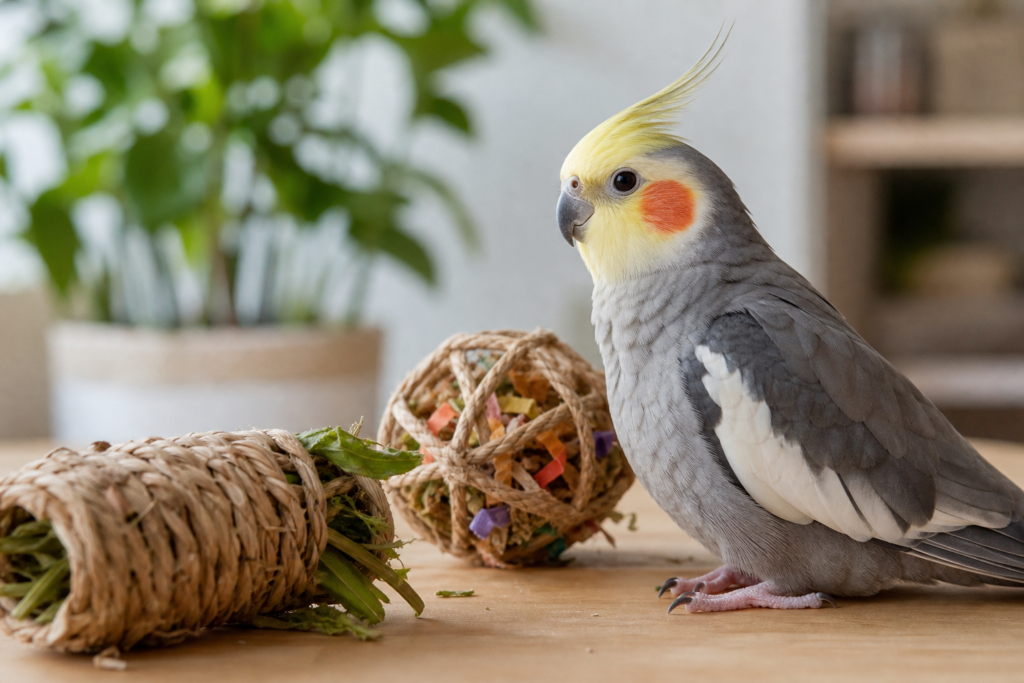
You must make your bird work for its food. Foraging satisfies deep-seated natural instincts and occupies their minds. Start simple by hiding treats in crumpled paper cups or under small wooden blocks. As your bird becomes more proficient, you can introduce complex, reusable foraging toys. Incorporating parrot foraging toys into their daily routine is absolutely essential for their mental well-being.
Rotate Toys Frequently
A static cage becomes a boring cage. Keep a collection of different toy types—woods for chewing, ropes for preening, bells for making noise, and puzzles for problem-solving. Rotate the toys every week to keep the environment fresh and unpredictable. (Birdsmania occasionally reviews safe bird toys; always ensure toys are appropriately sized for your specific bird to prevent injury).
Maximize Out-of-Cage Time
Birds need to stretch their wings and explore. Provide a safe, bird-proofed play stand outside the cage. Ensure there are no ceiling fans running, open windows, or toxic houseplants nearby. Interactive playtime with you strengthens your bond and tires out their active brains.
When to See a Vet
Knowing exactly when to escalate to a professional is critical. At Birdsmania, we advocate for a proactive, safety-first approach to avian health. You should seek immediate veterinary care if you notice any of the following red flags:
- Sudden Onset: If your bird has never plucked before and suddenly pulls out a large amount of feathers overnight.
- Skin Damage: If the plucking has progressed to chewing, picking at, or bleeding from the skin.
- Behavioral Changes: If plucking is accompanied by lethargy, fluffing up, sitting at the bottom of the cage, loss of appetite, or changes in droppings.
- Failure of Environmental Changes: If you have strictly implemented enrichment and sleep routines for 4 to 6 weeks with zero improvement in the behavior.
An avian vet can perform diagnostic tests, such as blood panels, fecal exams, and X-rays, to rule out hidden illnesses. They can also prescribe therapeutic remedies, such as collars to physically prevent plucking while you address the underlying behavioral causes.
Managing Your Expectations
It is vital to approach this journey with realistic expectations. If a bird has been plucking for years, the behavior may have become an addiction. Even if you perfectly resolve the underlying medical or environmental issue, the bird may continue to pluck simply out of habit.
Your ultimate goal should not necessarily be perfect feathers, but rather a happy, healthy, and engaged bird. By providing a nutritious diet, 10-12 hours of uninterrupted sleep, and a highly enriching environment, you are giving your bird the best possible chance at recovery. Celebrate the small victories—a few new pinfeathers emerging, or a decrease in the frequency of destructive chewing.
Feather destructive behavior is a complex puzzle, but with patience, love, and a strategic approach, you can significantly improve your feathered companion’s quality of life. Stay observant, remain consistent, and never hesitate to lean on the expertise of a qualified avian professional.
Frequently Asked Questions
Is feather plucking always a medical problem?
Not always. Plucking can start from medical causes (infection, parasites, pain, nutrition) or from boredom, stress, hormones, or sleep loss. Any new plucking should still be checked by an avian veterinarian first.
What should I do immediately if my bird starts plucking?
Book an avian vet visit, do not punish the bird, improve diet and bathing opportunities, check humidity and sleep (10–12 hours dark), and begin simple foraging enrichment while you wait for diagnostics.
Can foraging toys help stop feather destructive behavior?
Yes. Boredom and under-stimulation are leading behavioral drivers. Making birds work for food with foraging puzzles occupies natural instincts and reduces idle preening that turns destructive.
When should I see a vet for feather plucking?
Seek care for sudden onset, skin damage or bleeding, lethargy or appetite changes, abnormal droppings, or if enrichment and sleep fixes show no improvement after 4–6 weeks.
