
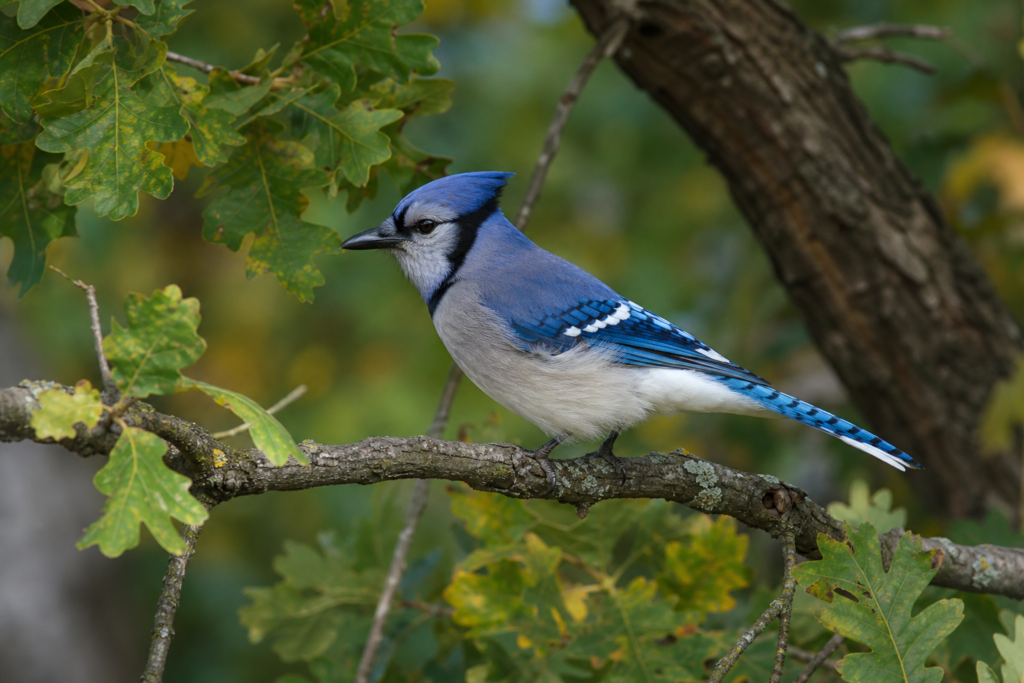
Quick answer: Blue jays (Cyanocitta cristata) are intelligent corvids of eastern and central North America. They use loud calls, complex social behavior, and caching to survive in forests, edges, and suburbs. They eat nuts, seeds, insects, and occasionally eggs or nestlings.
According to resources from the Cornell Lab of Ornithology, blue jays are known for mimicry (including hawk calls) and strong pair bonds.
Habitat
Blue jays prefer mixed woodlands with oaks (acorns matter), but also thrive in parks and yards with feeders and native trees. They need cover for nesting and open edges for foraging.
Behavior highlights
- Family groups and noisy territorial calls
- Food caching in fall
- Bold feeder visitors that can dominate smaller songbirds
How to support blue jays responsibly
- Offer tray/hopper feeders with peanuts in shell, sunflower, and suet where appropriate.
- Plant native oaks and berry producers.
- Keep cats indoors; reduce window collisions with screens or patterned film.
More backyard tactics: Backyard birding hub.
FAQ
Where do blue jays live?
Primarily eastern and central North America, in forests and suburban habitats.
What do blue jays eat?
Acorns, nuts, seeds, insects, and sometimes eggs or nestlings.
Are blue jays aggressive?
They can be assertive at feeders and mob predators; this is normal corvid behavior.
Do blue jays migrate?
Some populations move seasonally; many remain year-round depending on food and region.
