
Affiliate disclosure: Birdsmania is a participant in the Amazon Services LLC Associates Program. As an Amazon Associate we earn from qualifying purchases. See our Affiliate Disclosure.
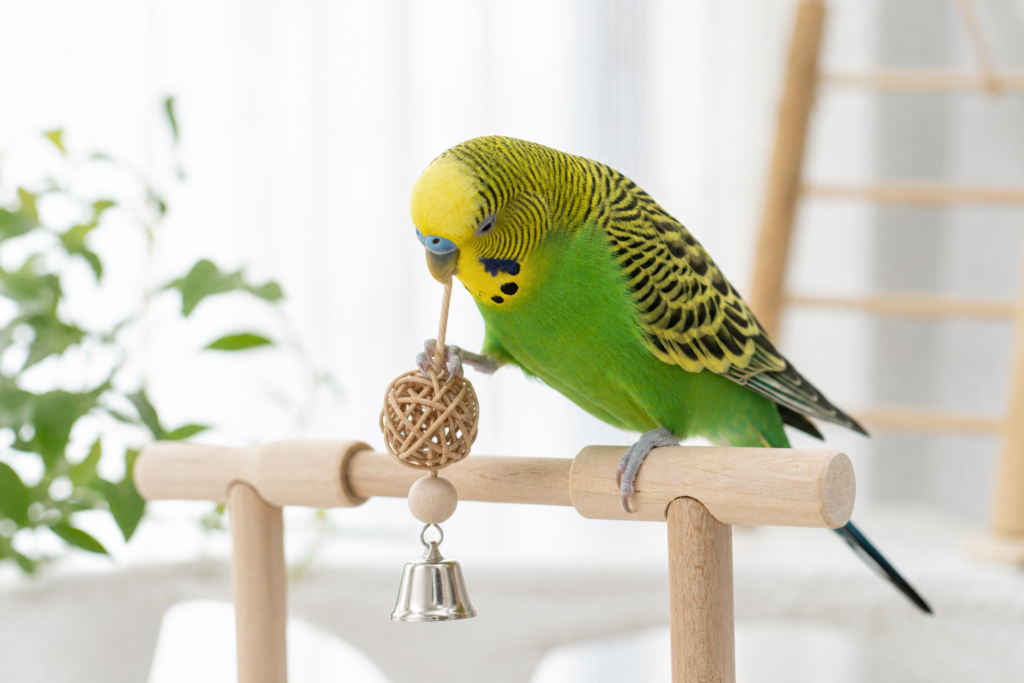
Parakeets, particularly budgerigars (budgies), are small, energetic parrots bursting with personality and athleticism. Despite their diminutive size, these Australian natives are remarkably intelligent, highly social, and possess seemingly endless energy. Parakeets spend their days climbing, swinging, flying short distances, and interacting with their flock mates—in the home, that’s you and potentially other parakeets. Without proper enrichment toys that encourage movement and engagement, parakeets become bored, anxious, and prone to behavioral problems.
The best toys for parakeets are those that capitalize on their natural instincts: climbing, swinging, foraging, and social interaction. Parakeets are naturally attracted to movement—anything that swings, spins, or dangles will instantly capture their attention. Additionally, mirrors and bells provide important auditory and visual stimulation. However, it’s crucial to select age-appropriate toys that won’t overwhelm or frighten your small companion. A toy suitable for a large macaw would absolutely dwarf a parakeet and create unnecessary anxiety.
To learn more about parakeet care, visit our detailed parakeet care guide and explore our comprehensive parakeet toy collection. For broader information about all pet bird species and their unique needs, check out our complete resource library.
Quick Comparison: Top Parakeet Toys
| Toy Name | Material | Type | Size | Best For |
|---|---|---|---|---|
| Colorful Bell String | Stainless Steel Bells | Auditory/Interactive | 8″ strand | Sound lovers |
| Acrylic Swing | Acrylic Seat & Chains | Movement | 3″ seat | Active swingers |
| Mirror Ball Toy | Plastic Mirror & Bell | Visual/Sound | 2.5″ ball | Social birds |
| Climbing Chain | Stainless Steel Links | Physical Activity | 12″ chain | Climbers |
| Spinning Wheel | Acrylic & Wood | Movement | 4″ diameter | Energetic birds |
| Small Foraging Cup | Acrylic with Dowel | Foraging/Puzzle | 2″ cup | Problem-solvers |
Our 6 Best Toys for Parakeets
1. Colorful Bell String
Parakeets are naturally attracted to sound and movement, making bell strings an essential toy for any budgie cage. This string features multiple stainless steel bells of varying sizes, each producing a slightly different pitch. As your parakeet swings from bell to bell, they create an engaging symphony while getting physical exercise. The stainless steel construction ensures the bells won’t rust or degrade, and they’re completely safe if accidentally ingested in tiny pieces. Many parakeet owners find that hanging a bell string near the perch encourages their birds to be more active and vocal.
Pros:
- Encourages natural vocalizations and sounds
- Durable stainless steel construction
- Provides physical exercise
- Affordable and long-lasting
- Parakeets love making noise
Cons:
- Can be noisy—not ideal in quiet homes
- Some parakeets may get spooked by loud bells
- Requires regular inspection for loose bells
- May become dull-sounding over time
2. Acrylic Swing
The swing is perhaps the quintessential parakeet toy. This acrylic seat attached to stainless steel chains allows your parakeet to swing back and forth, experiencing the gentle motion that mimics natural flight. Swinging provides both physical exercise and psychological satisfaction—birds in the wild experience this sensation during gentle winds and movement through branches. The durable acrylic seat won’t splinter or deteriorate, and the stainless steel chains are completely rust-proof. Most parakeets will spend hours contentedly swinging if given the opportunity.
Pros:
- Provides essential movement and exercise
- Durable materials built for longevity
- Naturally appealing to parakeets
- Easy to install and clean
- Prevents boredom-related behaviors
Cons:
- Takes up cage space
- Some birds may ignore it initially
- Chains may collect debris over time
- Not suitable for extremely small cages
3. Mirror Ball Toy with Bell
This toy combines three elements parakeets love: mirrors, bells, and movement. The small mirror ball attracts your parakeet’s social instincts (they see their reflection as a companion), while the attached bell provides auditory stimulation. The toy spins and moves as your bird interacts with it, maintaining engagement. The plastic mirror is completely safe and won’t shatter. However, be aware that excessive mirror interaction can sometimes lead to obsessive behaviors or hormonal stimulation in some birds—it’s best used in moderation rather than as an all-day fixture.
Pros:
- Multiple sensory stimulation (visual, auditory, tactile)
- Small and lightweight for parakeets
- Safe plastic construction
- Encourages physical interaction
- Affordable and durable
Cons:
- Can encourage excessive use and hormonal behavior
- Requires supervised use in some birds
- May reduce interest in human interaction if overused
- Mirror surface can become cloudy
4. Stainless Steel Climbing Chain
Parakeets are natural climbers, and a stainless steel chain provides the perfect climbing structure. Unlike rope toys that can fray and cause entanglement injuries, stainless steel chains are completely safe and durable. Your parakeet will enjoy climbing hand-over-foot up and down the chain, working their leg muscles and entertaining themselves for extended periods. The chain can be positioned vertically or at an angle to create different climbing challenges. This toy is especially valuable for parakeets in smaller cages who don’t have much room for other toys.
Pros:
- Extremely durable and long-lasting
- No fraying or tangling risks
- Excellent physical exercise
- Space-efficient climbing toy
- Easy to clean and sanitize
Cons:
- Some birds may not recognize it as a toy initially
- Requires proper installation to prevent injury
- Can become dusty and require frequent cleaning
- Less visually interesting than colorful toys
5. Spinning Wheel Toy
This colorful spinning wheel captures a parakeet’s fascination with movement and rotation. The wheel features multiple small perches around its circumference and bright colors to attract attention. As your parakeet lands on different perches, their weight causes the wheel to spin, creating an interactive, entertaining experience. The acrylic and wood construction is completely bird-safe, and the mechanism is smooth enough to spin freely without catching. Many birds will spend surprising amounts of time on the wheel, essentially creating their own entertainment through natural movement.
Pros:
- Encourages natural movement and exercise
- Interactive design provides extended engagement
- Bright colors attract attention
- Safe, non-toxic materials
- Unique entertainment experience
Cons:
- Requires adequate cage space
- Can become jammed with debris
- Some birds may not be interested initially
- Needs regular cleaning to function smoothly
6. Small Foraging Cup Puzzle
While parakeets have smaller beaks than larger parrot species, they’re still intelligent and appreciate foraging opportunities on an appropriate scale. This small acrylic foraging cup features a wooden dowel puzzle that requires parakeets to manipulate the dowel to access tiny treats hidden inside. It encourages problem-solving, beak manipulation, and the satisfaction of successfully extracting a reward. Parakeets will learn quickly how to use this toy, making it perfect for intellectually stimulating enrichment during indoor flight time or cage time.
Pros:
- Appropriately sized for small beaks
- Encourages problem-solving skills
- Safe natural wood and acrylic materials
- Teaches intelligence and persistence
- Reusable for long-term enrichment
Cons:
- Some parakeets lose interest after learning it
- Requires motivation with appropriate treats
- May accumulate food debris inside
- Not suitable for aggressive chewers
Best Practices: Creating an Enriching Parakeet Toy Environment
Parakeets thrive on variety and novelty. Rather than having all toys in the cage at once, rotate through different toys every 2-3 days to maintain your bird’s interest. A bird that sees the same toy daily becomes bored, whereas a toy that suddenly reappears after an absence feels fresh and exciting again. Create a toy rotation schedule that includes movement toys (swings, wheels), auditory toys (bells), tactile toys (mirrors, chains), and foraging toys (puzzle cups).
Pay attention to your individual parakeet’s preferences. Some birds are natural acrobats who love swings and climbing, while others prefer quiet, social interaction through mirrors. Observing these preferences helps you curate the perfect toy collection. Also consider your living situation—if noise is a concern, minimize bell toys and focus on silent movement-based enrichment. The goal is to create an environment where your parakeet is mentally and physically stimulated without creating stress or excessive noise.
Remember that toys should complement human interaction, not replace it. Even the best toys cannot provide the social bonding and training that direct human contact offers. Plan to spend time with your parakeet daily, allowing supervised flight time outside the cage and engaging in interactive games or training sessions.
Frequently Asked Questions
Are mirrors safe for parakeets?
Mirrors are generally safe, but they require moderation. Some parakeets become obsessed with their mirror reflection, leading to reduced interest in human interaction and potential hormonal issues. If you notice excessive mirror interaction or behavioral changes, reduce mirror access or remove it temporarily. Use mirrors as occasional enrichment rather than permanent cage fixtures.
Can parakeets play with rope toys?
Natural fiber ropes (100% cotton or sisal) are generally safe if your parakeet doesn’t excessively chew them. However, because parakeets’ beaks are smaller, rope toys pose less risk than with larger parrots. Still, inspect rope toys daily for fraying, and remove them if threads become loose. Many owners prefer stainless steel chains as a safer alternative.
How many toys should my parakeet have?
A good rule is to have 5-7 different toys in your rotation, with only 3-4 in the cage at any given time. This prevents overcrowding while maintaining novelty. Rotate toys regularly to keep your bird mentally stimulated and prevent boredom.
What’s the difference between safe and unsafe toy materials?
Safe materials include stainless steel, acrylic, natural untreated wood, and natural fibers like cotton or sisal. Avoid galvanized metal (contains toxic zinc), soft PVC, painted wood that may contain lead, and synthetic dyes. Always check toys for small choking hazards before introducing them to your cage.
Why does my parakeet sometimes ignore toys?
Parakeets can be cautious about new objects. This is normal. Place a new toy nearby and let your bird observe it before expecting engagement. You can also model play by gently manipulating the toy yourself. Most birds will become interested once they understand it’s safe.
How often should I clean parakeet toys?
Inspect toys daily for damage or heavy soiling. Clean bell strings and chains weekly with warm water. Mirror balls can be wiped weekly. Wooden toys and rope toys cannot be easily sanitized and should be replaced when visibly soiled with feces or food debris.
Our Recommendation
For most parakeets, we recommend a balanced toy collection that includes a swing (for movement), a bell string (for auditory stimulation), a climbing chain (for physical exercise), and a mirror toy used in moderation (for social enrichment). Rotate these toys regularly with seasonal additions to maintain novelty and engagement.
By providing appropriate, varied enrichment toys, you’re giving your parakeet the mental and physical stimulation they need to thrive. A well-entertained parakeet is a happy, healthy, behaviorally sound companion. For more detailed information about parakeet care and enrichment, explore our comprehensive parakeet resources and complete pet bird guides.
